
A garage is usually considered an asset. It provides storage, protects vehicles, and can make a property more attractive to future buyers.
But an old garage isn't automatically worth saving.
When a detached garage has a failing roof, structural problems, extensive rot, foundation issues, or years of deferred maintenance, homeowners and investors have an important decision to make.
The answer isn't always as obvious as it seems.
When an old garage needs significant work, the question isn't just whether it can be repaired—it's whether repairing it makes financial sense.
Start With the Structure
Before deciding what to do with an old garage, determine what you're actually working with.
Cosmetic problems are one thing. Peeling paint, worn siding, an old garage door, or damaged trim can often be repaired without fundamentally changing the building.
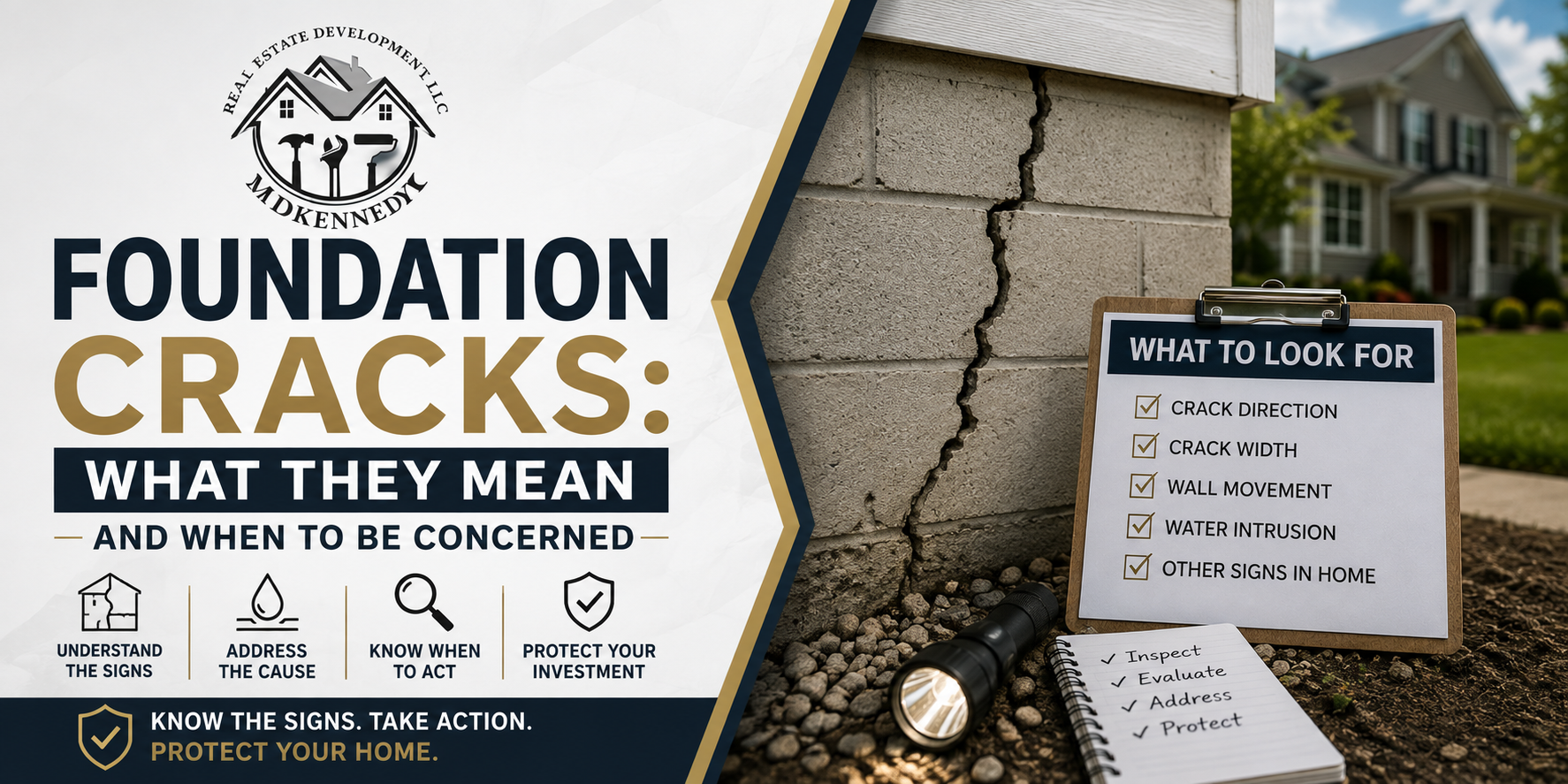
Structural problems are different.
Structural warning signs to look for
- A sagging or failing roof
- Rotted framing
- Significant foundation movement
- Walls leaning or out of square
- Extensive water damage
- Deteriorated sill plates
- Multiple problems from years of deferred maintenance
Once several major components need to be repaired at the same time, the economics of saving the garage can change quickly.
Don't Assume a Garage Always Adds Value
It's easy to think, "The property has a garage, so we need to keep it."
Not necessarily.
A functional garage can absolutely be valuable. A deteriorated garage that requires substantial work can become a liability instead.
Watch this one: For a homeowner preparing to sell, an obviously failing structure may become one more concern for potential buyers. For an investor renovating a property, spending thousands of dollars to preserve a garage doesn't automatically mean you'll get that money back when the property sells.
What will this garage be worth after we spend the money to repair it?
That's very different from simply asking what it will cost to fix.
Repair, Replace, or Remove?
Generally, there are three options.
Keep what's there
Repairing may make sense when the basic structure is solid and the problems are relatively contained.
If the foundation, framing, and roof structure are still in good condition, improvements such as new roofing, siding, doors, windows, or trim may give the garage many more years of useful life.
Right spot, wrong building
Sometimes the location and usefulness of a garage make sense, but the existing building doesn't.
Replacing the structure may be a better long-term investment than putting substantial money into an outdated or severely deteriorated building. It costs more upfront, but that money goes toward a new structure rather than continually repairing an old one.
Clear the problem
Demolition isn't necessarily a loss. If the garage requires extensive structural work and doesn't provide enough value to justify the investment, removing it may be the smartest decision.
It can also open up the rest of the property: additional parking, a larger yard, improved curb appeal, or space for a future garage or another improvement.
Sometimes removing the problem creates more value than repairing it.
Look at the Entire Property
This is especially important when renovating a home for resale.
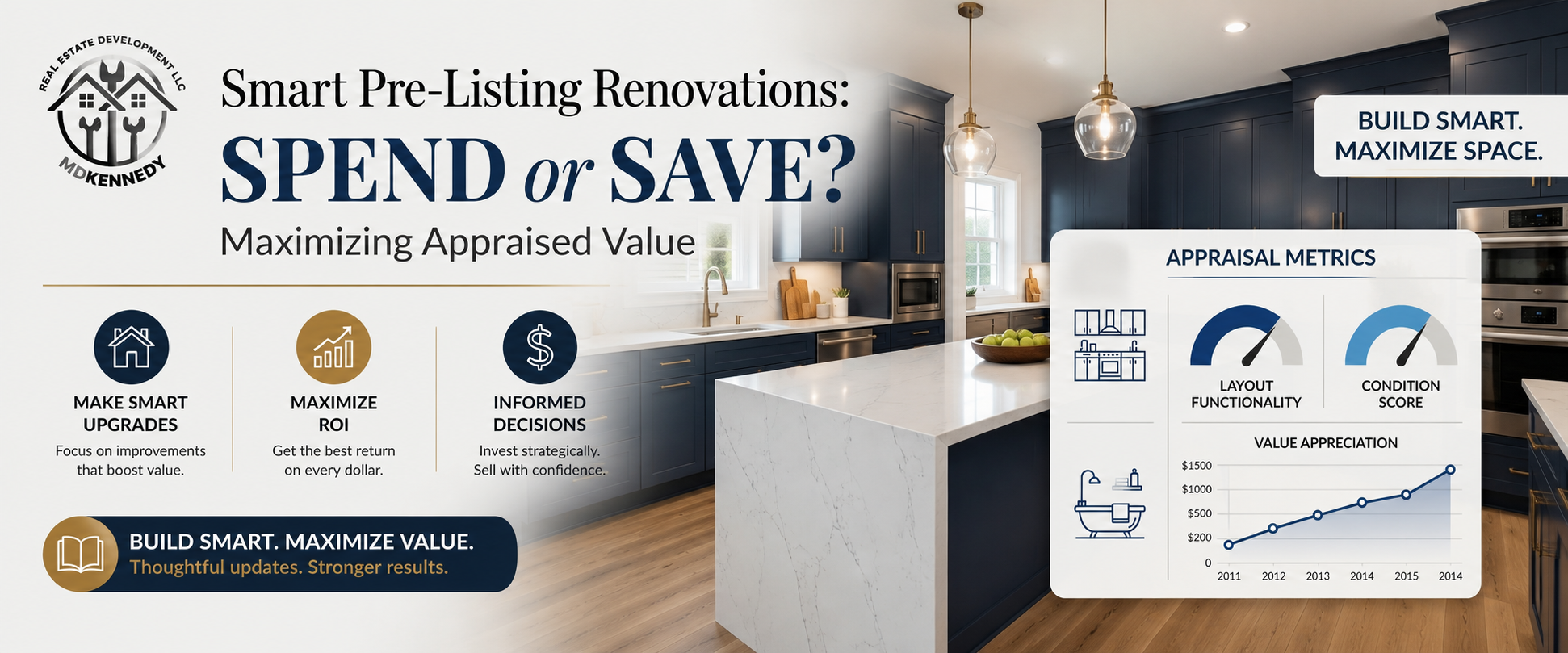
Every renovation has a budget. Money spent in one area isn't available somewhere else. If repairing an old garage requires a significant investment, ask what that same money could accomplish inside the house.
- Update the kitchen
- Replace an aging roof
- Improve a bathroom
- Address electrical or plumbing
- Knock out several smaller projects
The goal isn't to save everything. The goal is to put renovation dollars where they make the most sense.
The Same Rule Applies to Investment Properties
When we evaluate a property at MDKennedy Real Estate Development, we don't look only at whether something can be repaired. Almost anything can be repaired with enough time and money.
That's an important distinction for anyone buying a property to renovate or flip. Before putting money into an existing structure, consider the cost of the work, the property's eventual value, what buyers in that market expect, and whether those renovation dollars would generate a better return somewhere else.
Make the Decision Before You Start Spending
One of the easiest ways for a renovation budget to get out of control is to start repairing something before deciding whether it's actually worth saving.
- Get a realistic understanding of the condition first.
- Estimate the complete repair—not just the first obvious problem.
- Compare the cost of repairing the garage against replacing it or removing it.
- Consider how each option affects the property as a whole.
A garage can add value to a property. But sometimes the smartest renovation decision is knowing when not to save it.
Not sure which improvements are worth it?
Planning a renovation or trying to decide where your project dollars should go? MDKennedy Real Estate Development can help evaluate the project and determine the best path forward.
Talk to MDKennedyBy
Matthew Kennedy
4 min read