
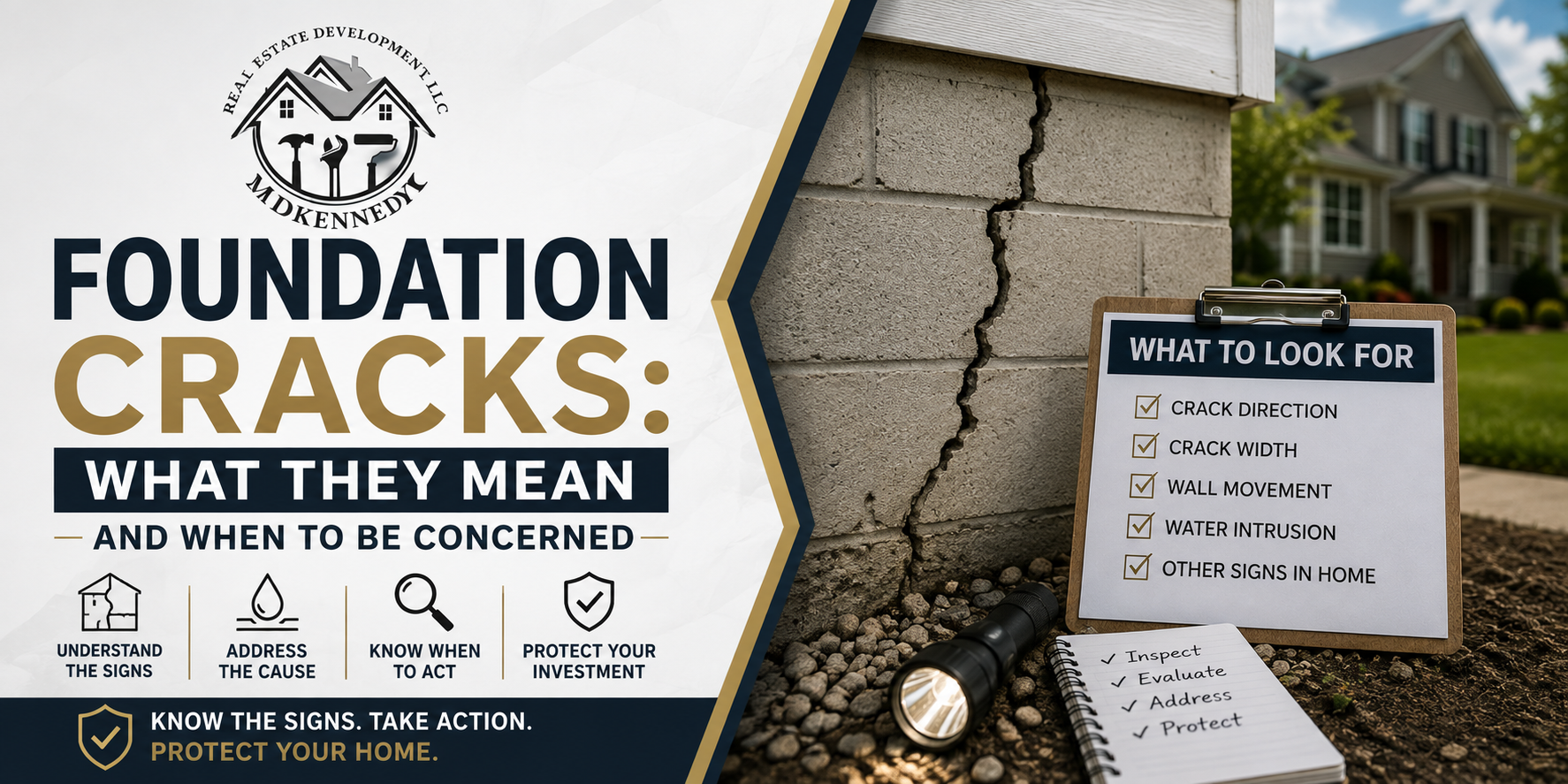
Finding a crack in your foundation can be alarming. But not every crack means your home has a major structural problem.
In Western New York, we work on homes with several different types of foundations. Older homes may have stone foundations, while block and poured concrete foundations are common in homes built during different periods throughout the area.
Each type of foundation can develop its own issues, and the location, direction, and size of a crack can help determine what may be happening.
▶ See a vertical crack in a block foundation, or open on YouTube
Stone Foundations
Stone foundations are common in many of Western New York's older homes. Considering the age of some of these houses, it's not unusual to see deterioration or previous repairs.
Common concerns can include:
- Loose or deteriorating mortar
- Water infiltration
- Stones that have shifted
- Bulging or movement in sections of the wall
- Previous repairs that are beginning to fail
Some deterioration may simply come with age, but significant movement or recurring water problems shouldn't be ignored.
Maintaining the mortar between the stones and controlling water around the exterior of the foundation can play an important role in keeping these foundations in good condition.
Block Foundations
Concrete block foundations are also common throughout our area.
Cracks in block walls can appear vertically, horizontally, or in a stair-step pattern following the mortar joints. The direction and location of the cracking can provide clues about what may be causing it.
A small vertical crack, for example, doesn't automatically mean a foundation is failing. It could be related to normal movement, settlement, or shrinkage.
Stair-step cracking along mortar joints can also warrant further evaluation, particularly when accompanied by visible movement.
Poured Concrete Foundations
Poured concrete foundations can develop cracks as the concrete cures and the home settles.
Thin vertical cracks are relatively common and aren't necessarily a structural concern. However, even a small crack can provide a path for water to enter the basement.
Cracks deserve more attention when they:
- Continue to grow
- Become noticeably wider
- Show displacement from one side to the other
- Allow water into the basement
- Appear alongside other signs of movement in the home
The crack itself is only part of the picture. Understanding why it developed is just as important.
Water Is Often Part of the Problem
Many foundation problems begin outside the house. Poor drainage, clogged gutters, improperly directed downspouts, and grading that slopes toward the home can allow water to collect around the foundation.
In Western New York, our freeze-and-thaw cycles can make these conditions even more important. Water in the soil can freeze, expand, and place additional pressure against foundation walls.
When Should You Have a Foundation Crack Evaluated?
A crack should get additional attention if you notice significant movement, bowing walls, recurring water intrusion, rapidly changing cracks, or other changes throughout the home.
Those changes might include doors that suddenly don't close properly, uneven floors, or new cracking in walls and ceilings.
That doesn't necessarily mean there's a major structural failure. It means the underlying cause should be identified before deciding how to repair it.
Don't Just Cover the Crack
One of the biggest mistakes homeowners can make is treating every foundation crack as a cosmetic problem. Filling or covering a crack may improve its appearance, but it doesn't necessarily address what caused it.
The right repair depends on the type of foundation, the type of crack, whether movement is occurring, and whether water or exterior pressure is contributing to the problem.
At MDKennedy Real Estate Development, we believe the first step is understanding what's actually happening before deciding how to fix it.
Noticed Cracking, Movement, or Water Problems?
If you've spotted cracking, movement, or water issues around your foundation, having it evaluated early can help you determine whether you're dealing with routine maintenance or something that needs more attention. MDKennedy Real Estate Development will help you understand what's actually happening before deciding how to fix it.
Have your foundation evaluatedThe crack itself is only part of the picture — understanding why it developed is what protects your home.
Thinking of selling? The Kennedy Real Estate Team can help you price, market, and sell your home for maximum value.
By
Matthew Kennedy
4 min read
.png)