
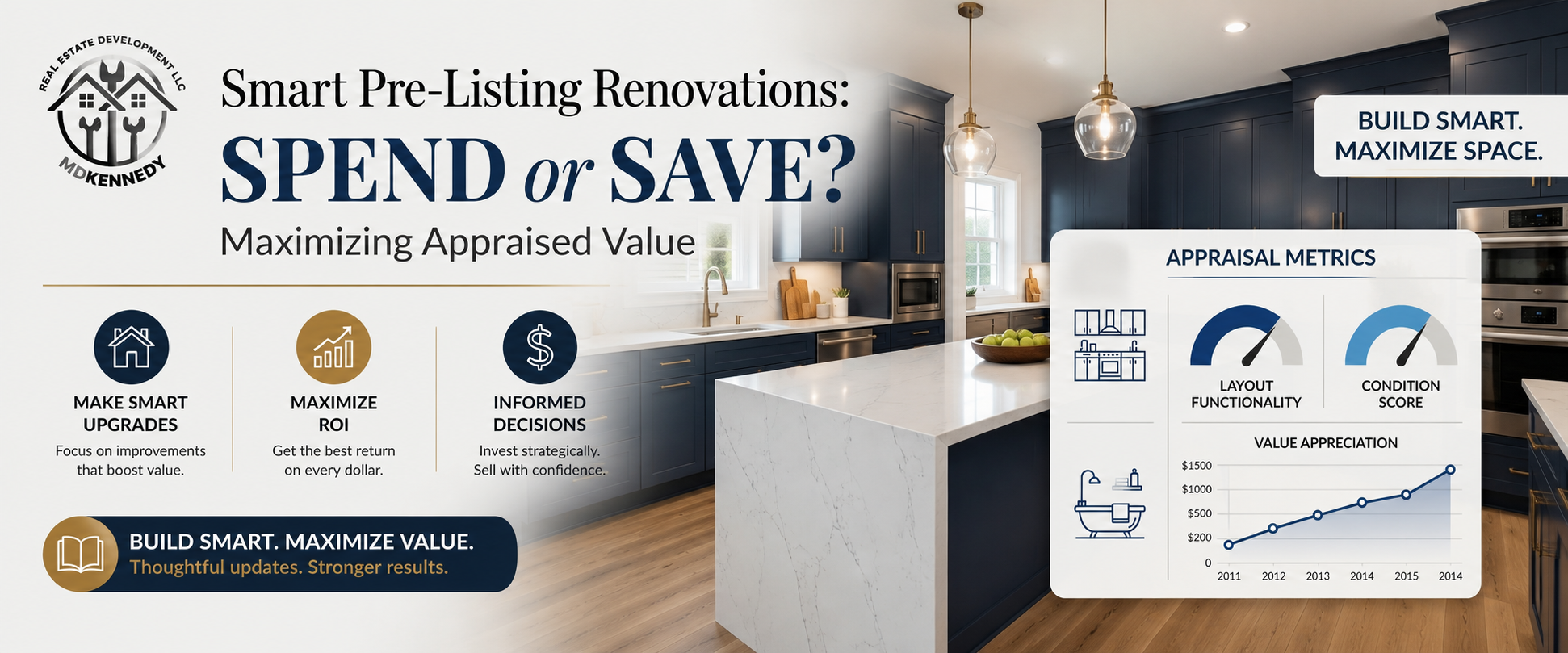
How Renovations Affect Appraisals and Home Values
One of the most common questions homeowners ask is: "If I renovate my home, how much value will it add?" The answer depends on the type of renovation, quality of work, local market conditions, and the value range of surrounding properties. At MDKD, we help homeowners and investors make renovation decisions with value in mind.
What Does an Appraiser Look At?
Renovations can positively influence many of these factors, but not every dollar spent automatically translates into equal value.
Greatest Impact
Renovations That Often Add the Most Value
Kitchen Improvements
Kitchens are among the most scrutinized areas during appraisals and buyer evaluations. A refreshed kitchen improves both appraised value and buyer demand.
- New Cabinetry
- Countertops
- Modern Appliances
- Lighting
- Better Layouts
Bathroom Updates
Improvements can significantly affect perception and marketability. Even modest bathroom renovations can make a home feel substantially newer.
- New Vanities
- Updated Fixtures
- Modern Flooring
- Lighting
- Storage
Finished Living Space
Increasing usable square footage often contributes positively to value, improving both appraisal results and buyer appeal.
- Finished Basements
- Finished Attics
- Bonus Rooms
- Home Offices
Mechanical Improvements
Not all value-adding renovations are visible. These improvements support value by reducing future maintenance concerns.
- New Furnace
- HVAC Updates
- Electrical
- Plumbing
- Insulation
Renovations That May Not Deliver Full Return
Some projects improve enjoyment but don't always provide a dollar-for-dollar increase in value. Over-improving can limit your return if neighboring homes don't support the increased value.
- Highly Customized Finishes
- Luxury Beyond Neighborhood Norms
- Specialty Rooms
- High-End Materials in Mid-Range Markets
The Importance of Comparable Sales
Appraisers rely heavily on recent comparable sales. Even if you spend $50,000 on renovations, the market ultimately determines how much value those improvements contribute.
- If nearby homes with similar updates consistently sell higher, your renovations are more likely to be reflected in the appraisal.
- If no comparable properties support the increase, the return may be lower than expected.
Renovating With a Plan
The most successful projects start with a strategy. Before investing in major renovations, consider:
- Your long-term goals
- Neighborhood values and comparable sales
- Current property condition
- Potential return on investment
- Future resale appeal
Final Thoughts
Renovations can absolutely increase home value, but the smartest projects balance cost, functionality, buyer demand, and market conditions. Whether you're preparing to sell, improving a rental, refinancing, or planning a long-term investment, understanding how renovations influence appraisals helps you make better decisions. At MDKD, we focus on practical improvements that enhance both property value and long-term performance.
By
Matthew Kennedy
6–7 min read